Start with one workflow.Turn AI into organisational capability.
Workflows · Human collaboration · Organizational knowledge
 STARDEV星迭
Workflows · Human collaboration · Organizational knowledge
Images, voice notes, purchase orders. Start with work as it actually arrives.
Images / voice / ordersIdentify the content, check customers, products and prices, then route the work.
Identify / check / routeAI prepares the material and recommendations. People own exceptions and key decisions.
Human confirmationGenerate the files your existing systems need, ready for the next person to use.
Files / handoff / resultsConfirmed rules, versions and results become knowledge the next person and workflow can use.
See what your company keepsBoth entrances lead to the same path: create a real business result, spread the working method to more people, then retain it as company capability.
Choose a time-heavy task in orders, stores, approvals, hiring or knowledge search. Make it work first, then measure it.
See the real projectBuild from one successful project: develop internal AI pioneers, connect the talent system, and retain knowledge, rules and working methods inside the company.
See the three-layer pathA REAL STARDEV PROJECT · REGIONAL PILOT FOR A LISTED FMCG GROUP
A sales-led listed FMCG group operates sales-support teams across several regions. Its Hong Kong lead invited Stardev to run a pilot: turn frequent order-follow-up work from images, voice messages and purchase orders into an AI-led workflow with staff confirmation.
Another large market in the same group still has sixty to seventy people supporting similar work. The Hong Kong project shows that AI can do more than make one person faster: it can redesign how a team operates.
Weekly order-entry time for one back-office role
Decide whether the work is worth doing, test one real loop, then connect it to teams and systems. Every level creates a useful result and a clear decision about what comes next.
For deciding where to begin
Use one real workflow to locate time costs, data boundaries, human decision gates, and the best first test.
For testing one defined loop
Use real materials with one user group and one defined job, producing traceable results that the team can judge directly.
For connecting a real team and its tools
Connect the proven method to real teams, permissions, and tools, with production monitoring, maintenance, and clear exit mechanisms.
These are not three service packages. They are the company’s capability path from workflows to people to organisational assets. An engagement can stop at one clear result or continue when the evidence supports it.
Map the workflow, find the real constraint, define the division of work between AI and staff, and connect it to existing operations.
Use real projects for internal learning, identify high-potential AI pioneers, and connect role profiles, development and OKRs to the transformation.
Create a governed company knowledge container with permissions and versions, continuously retaining approved conversations, workflows, prompts, rules and deliverables.
One delivery solves a current problem. Retained experience gives the next workflow a stronger starting point.
Start with a valuable task. Let AI prepare repetitive work while people retain control of key decisions.
Prove the first resultBring confirmed rules, workflow versions, business knowledge and collaboration experience into a company-owned working archive.
Keep the method in the companyThe next task and the next employee can access authorized experience, then improve it through new practice.
Let capability accumulateConfirmed decision criteria
Executable, traceable methods
Sources and useful context
Roles and handover records
What matters is not how many conversations one person had with AI. It is the decisions, rules and working methods the company has already validated. Stardev turns them into a traceable system that the next person can inherit and continue improving.
Turn every AI initiative into capability the company owns.You do not need to redesign the whole company on day one. Start with one valuable workflow, prove the result, then decide how to scale it across people and the organisation.
A customer message starts an order. Before a store visit, the route, talking points and priority products are ready. Before the day begins, managers receive a clear business brief. Start with three common ways to put AI to work.

AI turns chats, screenshots, voice notes and POs into a ready-to-check order draft.
Follow an order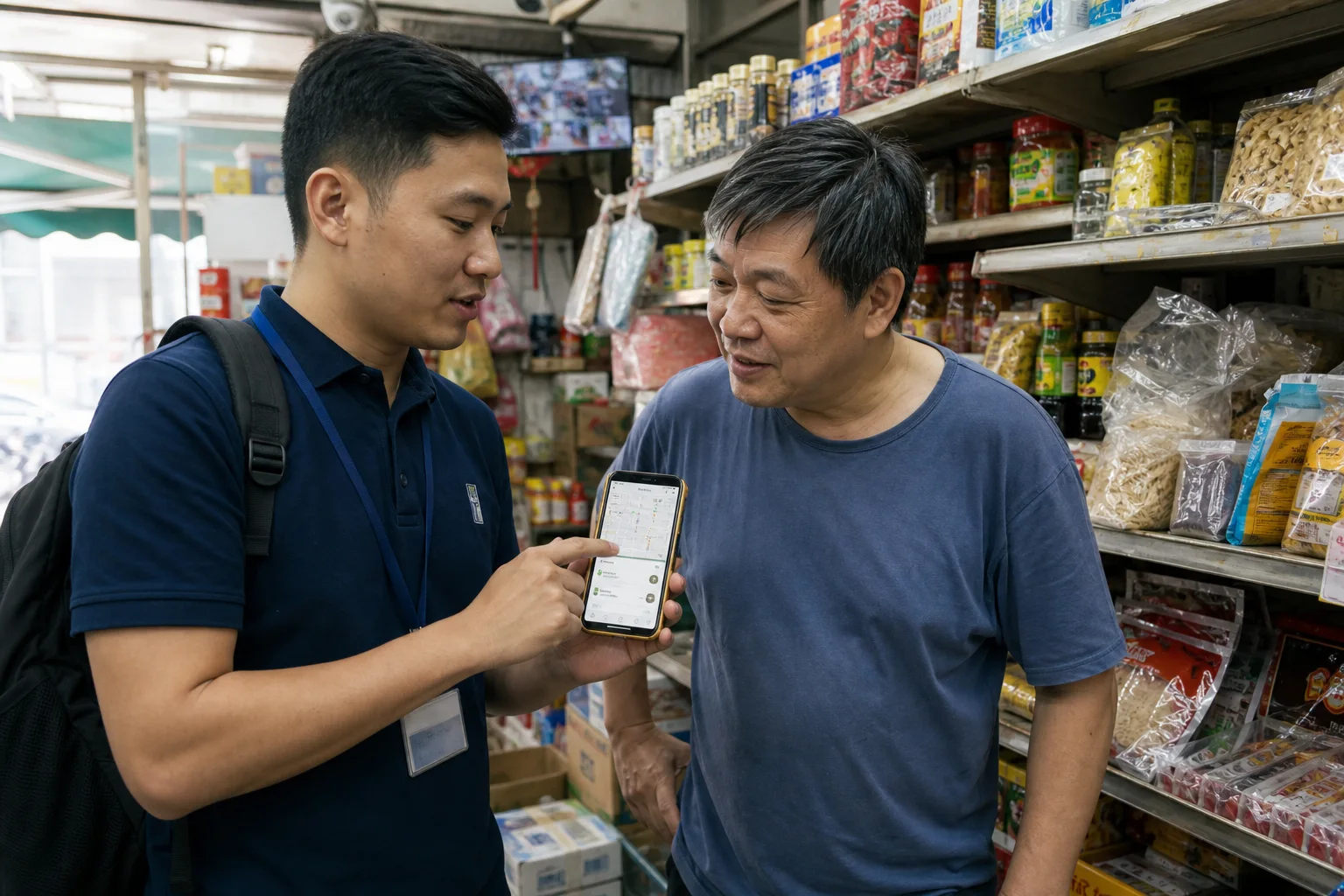
AI builds the day’s Route Plan, then prepares a store-specific talk track, objection handling and priority SKU mix for each restaurant, neighbourhood shop or supermarket.
Follow an AI-guided sales day
Each day, AI summarises selected public competitor updates and company-approved information from ecommerce, sales channels and physical stores, then creates a briefing for each role.
See a daily briefingAI handles the repetitive work first. People keep the key decisions.
One task, owned by one specialist
Information is found across chats, spreadsheets, and separate systems.
Organising, checking, and follow-up are completed manually.
Every step needs someone to check, remind, and hand it over.
The task and required materials enter through one place.
It organises, checks, drafts, and flags exceptions first.
They confirm important results, handle exceptions, and decide what happens next.

Start from real work, clear boundaries, and a controlled trial, so every expansion is supported by evidence rather than a large speculative plan.

Stardev founder Kevin previously held senior management roles at a Fortune Global 500 company and a publicly listed multinational group. Like many business leaders, he had to move the business forward while also finding information, checking details, chasing updates, and preparing documents—repetitive work that still had to get done.
When AI became genuinely useful, Kevin first applied it to his own work, then to the way his teams worked together. He saw that the problem was rarely a lack of effort; too much capable time was being spent completing processes for the sake of the process. Stardev grew from a practical idea: let AI take on the repetitive but necessary work, so people can focus on judgement, customers, and business growth.
Begin with information gathering, follow-ups, document preparation, or a single approval—and give the team time back where they can feel it.
Let AI gather, check, organise, remind, and prepare the next step, so people spend less time chasing the process.
AI prepares the information, highlights what matters, and moves the next step forward. Judgement, customer relationships, and critical decisions stay with the people who know the business best.
AI specialists, team collaboration, pricing, deeper services, and accountability.
The difference is not which is “smarter,” but whether the work needs division of labour. One AI specialist suits a focused task with a clear scope and repeatable steps: it uses a defined set of knowledge, rules, and tools to produce one result. A specialist team suits work that spans several stages, with different specialists handling research, analysis, drafting, or execution before a coordinating role combines and checks the result. For a hypothetical example, one meeting-notes specialist may be enough to turn a transcript into action items. If the job runs from a customer brief through market research, solution design, a quotation draft, and follow-up, research, solution, data, and follow-up specialists can work together before a person confirms the final result.
In many cases, yes. We first check whether the existing system supports a direct connection, or start with file import, export, or browser-based work. Complex ERP changes, custom development, company-hosted deployment, and large moves of old data are assessed separately.
AI can be wrong, so we do not let it carry a process through without limits. Before launch, we agree what it may handle on its own and what always needs a person’s confirmation. If information is missing, conflicting, or outside the agreed rules, the AI stops and asks the responsible person instead of guessing. It can organise information, prepare drafts, and update routine records, while payments, approvals, external messages, and contractual commitments still require a person’s final decision. We also keep a record of the steps so mistakes can be found and corrected.
Yes. We can deliver enterprise training and hands-on workshops, then continue by simplifying the work, organising company materials, connecting complex systems, or deploying in the company’s own environment. For a first structured move into AI, teams can bring real work into the room, identify the best part to hand over first, and only then decide whether to build a longer-term solution. Scope and pricing are agreed separately.
Packages include the stated build, trial, and adjustment work. Third-party AI fees, software subscriptions, travel, extra material preparation, and ongoing support are confirmed separately. For sensitive information, we first agree who may see it, which external services are used, and how it is kept.
Still looking for the right opening? Diagnose one real workflow. Already building momentum? Design how talent, operating mechanisms, and organisational capability continue from there.
Email a short description of the work and include the email address or phone number you prefer. We will check fit first, then contact you about the next step.
Hong Kong and cross-border enquiries can start by company email. Describe the workflow and leave your preferred email address or phone number.
Wherever your team is based, email a short description of the work and include your preferred email address or phone number.